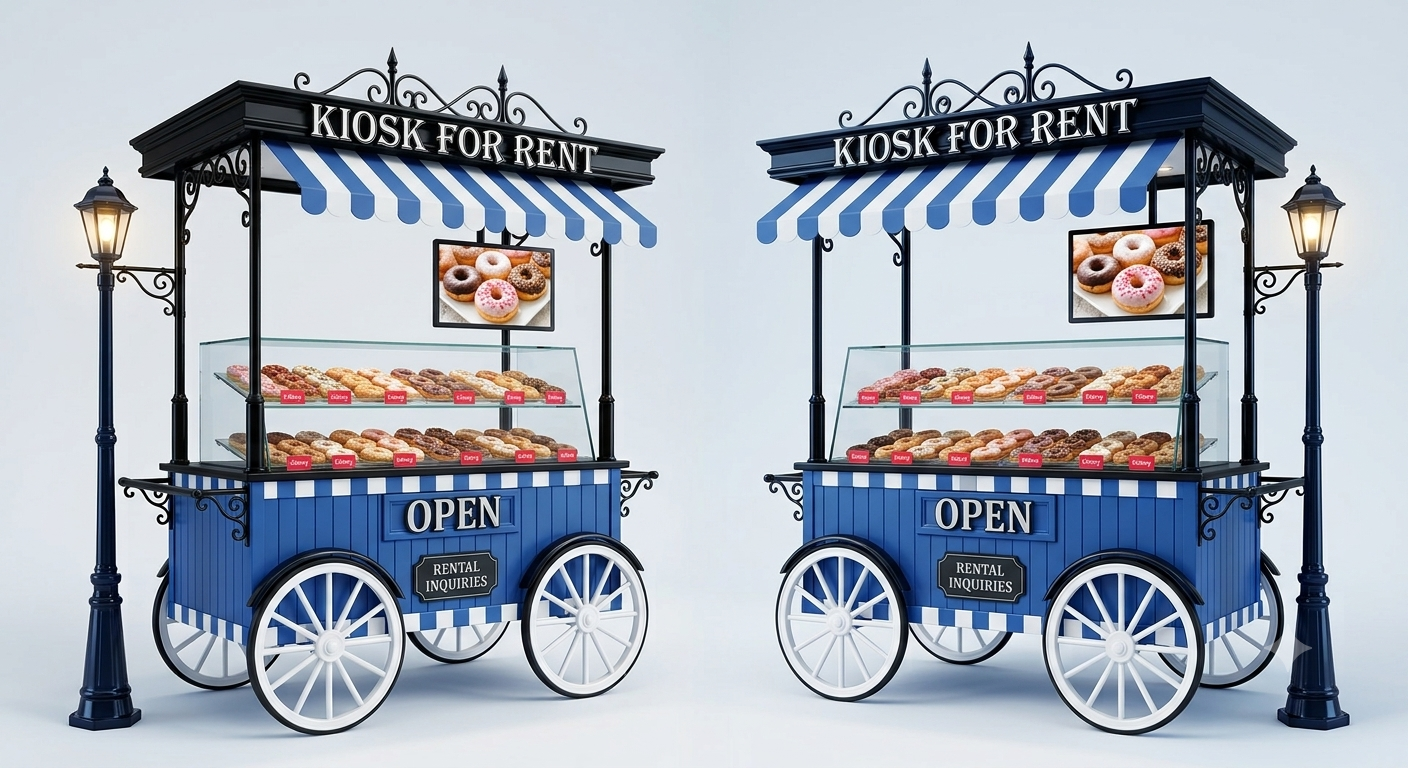
The food and beverage sector in the UAE is experiencing a massive shift toward mobile retail and short-term brand activations. Driven by a thriving specialty coffee culture and a high demand for pop-up culinary experiences, home-grown brands and established cafes are constantly seeking ways to expand their physical footprint. Whether launching a specialty coffee setup at a corporate festival or setting up a beverage booth at a major trade show, choose your structural foundation wisely.
For business owners, the initial dilemma is always the same: Should you invest capital in permanent custom fabrication, or does it make more financial sense to leverage short-term leasing? Choosing the right approach requires analyzing raw material costs, ongoing logistics, and operational flexibility. Here is an engineering and financial breakdown to help you determine whether a permanent purchase or a premium Kiosk for rent aligns with your F&B brand’s objectives.
1. Initial Capital Expenditure and Opportunity Cost
The upfront cost of manufacturing a permanent food or beverage kiosk can be substantial. Because F&B units require heavy customization—including stainless steel counter-tops, integrated plumbing, and dedicated electrical routing for high-wattage equipment—the engineering phase is labor-intensive.
Investing a significant portion of your startup capital into a single permanent asset limits your financial agility. For a new specialty coffee brand or a seasonal juice concept, that capital is often better spent on premium espresso machinery, high-grade organic coffee beans, and aggressive marketing campaigns.
Opting for a short-term lease drastically reduces your initial market-entry costs. Instead of paying a massive fabrication bill upfront, you pay a predictable, fixed rental fee for the exact duration of your event or pop-up contract. This operational expenditure model preserves your cash flow, allowing you to test market viability and gather direct consumer feedback with minimal financial risk.
2. Technical and Infrastructure Readiness for F&B Equipment
Unlike simple retail counters that only require a basic power outlet for a cash register, food and beverage kiosks are complex, functional micro-kitchens. Operating commercial espresso machines, grinders, ice makers, and blenders simultaneously places heavy technical demands on the underlying structure.
Electrical Load Capacity
A standard commercial two-group espresso machine alone can require anywhere from 4kW to 7kW of power. If a kiosk’s internal wiring and integrated circuit breakers are not engineered to handle high-amperage loads, the system will repeatedly trip during peak service hours. Premium rental kiosks designed specifically for F&B use come pre-fitted with heavy-duty industrial wiring and certified distribution boards that are ready to plug into venue power sources safely.
Integrated Plumbing and Drainage
A smooth coffee or beverage operation depends heavily on clean water supply and waste management. Custom building a permanent unit means you must design and maintain your own internal water pumps, freshwater holding tanks, and grease-trap compatible drainage systems. With a specialized F&B rental unit, these essential mechanical integrations are already built into the modular sub-floor. This ensures strict compliance with local venue hygiene standards right out of the box.
3. Logistics, Wear-and-Tear, and Storage Realities
Many business owners forget to calculate the hidden costs that accumulate after a permanent kiosk is fabricated. Once a short-term event concludes, a permanent unit must be carefully dismantled, loaded onto flatbed transport, and moved to a secure warehouse.
Industrial storage spaces in areas like Al Quoz or Ras Al Khor incur ongoing monthly rental fees. Furthermore, repeated transport causes inevitable structural wear-and-tear, chipboard cracking, and cosmetic damage. This requires costly refurbishment before the next pop-up launch.
| Operational Reality | Permanent Custom Purchase | Specialized F&B Rental |
| Upfront Cost | High capital investment for design and build | Low, predictable fixed operational cost |
| Technical Setup | Heavy engineering required for plumbing/power | Pre-certified for commercial espresso and food tools |
| Storage & Upkeep | Ongoing warehouse expenses and maintenance | Zero storage fees; vendor handles all refurbishment |
| Logistical Effort | Client manages transport and venue coordination | Turn-key delivery, installation, and collection by vendor |
Conclusion: Making the Strategic Move for Your Brand
If your brand has secured a long-term, multi-year lease in a major shopping center, investing in premium, custom permanent fabrication is undoubtedly the right choice to establish a flagship presence. However, if your business strategy relies on mobility, seasonal festivals, corporate events, and short-term product testing, leasing is the superior logistical and financial choice.
By selecting a technical fabrication partner that provides pre-engineered, food-grade rental kiosks with flexible branding options, you bypass administrative delays and technical complications. Ultimately, this allows your team to focus on what truly drives revenue—brewing exceptional coffee, serving quality food, and building a loyal customer base across the UAE.